Overview
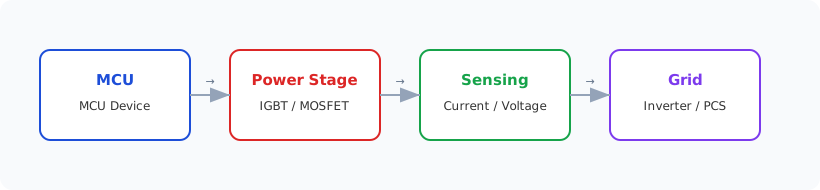
A photovoltaic inverter or a battery energy-storage converter converts DC power into grid-quality AC, and it runs continuously for years, often outdoors. The power stage must be efficient, rugged and reliable, and the current measurement must be accurate and isolated. BYD Semiconductor supplies the three-level IGBT modules and the current sensors that suit this role, and BeiLuo supplies them with genuine traceability and FAE support. This page shows how the parts fit together in a string inverter, a commercial inverter and a storage converter.
The Power Stage
The power stage converts the DC bus into an AC output, and a multilevel topology is common because it reduces the harmonic content and the switching loss. A three-level topology, such as the BYD T-type or I-type module, divides the DC bus so each device sustains about half the voltage, which lets a lower-voltage device switch faster with less loss and produce a cleaner output. The module packages several IGBT chips and diodes with a low-inductance internal layout and a direct-bonded-copper substrate that carries the current and conducts the heat to the baseplate.
Choosing the Module
The module is chosen by the bus voltage, the output current and the topology. The BYD 1200 V class suits a high DC bus in a three-level design, and the 650 V class suits a lower bus or a two-stage design. The T-type and I-type topologies differ in the conduction path and the device count, so the choice follows the architecture and the loss target. In a three-level topology each device sees about half the bus, so the class is chosen with that in mind plus margin for the open-circuit voltage and the switching overshoot.
The Current Measurement
The inverter needs an accurate current for the control loop, the grid synchronization and the protection. A BYD isolated current sensor measures the output and the grid current without a shunt and with galvanic isolation, so the high-voltage power stage and the control side stay separate and the insertion loss is low. The analog output feeds the controller's ADC directly, and the contactless measurement has no wear part, which suits an inverter that runs for years. The accuracy over temperature matters for the measurement and the protection.
Grid Synchronization and Protection
The controller uses the measured current and the grid voltage to synchronize and to regulate the output, and it uses the current to detect an island, an over-current or a fault and to shut the inverter down safely. Keep the current measurement accurate across the temperature range so the protection is reliable at the extremes.
Storage Converter
A battery energy-storage converter converts between the battery DC and the grid or the load, and it needs a bidirectional power stage and an accurate battery current. The same BYD three-level IGBT modules and current sensors apply, and the battery current measurement feeds the state-of-charge estimate and the protection. Because the converter runs continuously, the efficiency and the lifetime of the power stage are the main design drivers.
Thermal and Environmental Design
An outdoor inverter swings through a wide temperature range and may be sealed, so the thermal design and the derating matter. Provide a good thermal path from the baseplate to the heat sink, keep the current within the rating for the ambient and measure the case temperature at the worst case. A cooler module lives longer and derates less.
Getting Help
Send your DC bus voltage, output power, topology, ambient range and life target to our FAE team and we will propose an IGBT module and a current sensor, help choose the topology and the voltage class and review the thermal and isolation design. BeiLuo holds mainstream BYD modules and sensors in regional warehouses and ships every order with an import declaration, a certificate of origin and a RoHS compliance file, so a solar or storage design can move from prototype to production without a supply gap.